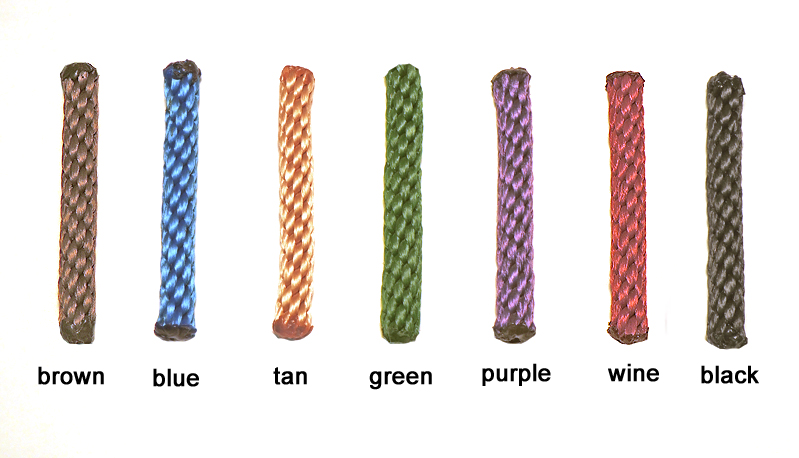
Rope Halter with Lead #AH1
$45.00
Description: The Rope Halter with Lead #AH1 is hand tied from one continuous 5/16 inch solid-braid nylon rope and comes complete with a white 1/2 inch Nylon Lead Rope #ALR2. There are no buckles to break or stitching to tear on these rope halters.
Available in blue, tan, green, purple, wine, black (shown in the color swatch) and neon orange and pink (see dropdown to order color).
These halters are made with softer cord than most other halters. There’s still plenty of strength in this rope but it’s more comfortable and maintains the sensitivity in your horse’s face.
How it works: To see how to properly tie a rope halter visit the video http://www.youtube.com/watch?v=T76kTxFa60Y&feature=channel&list=UL or read my Tack Talk article The Rope Halter. You may also see how to properly tie a lead rope by clicking Take Me To Your Lead Rope.
Related products
-

Above the Hock Kick Chain #KC2
$78.00Description: The Above the Hock Kick Chain #KC2 is made of 1 inch double and stitched latigo leather with a stainless steel roller buckle and dee. The 18 inch chain attached to the dee is also stainless steel.
How it works: It is attached above the hock. Placement above the hock eliminates the chain being drug around the stall. This is a useful tool for horses that want to kick the stall or trailer. Most horses will stop kicking after a short time but a small percentage will need to wear a kick chain indefinitely. This kick chain is sold as a single. If you need additional Above the Hock Kick Chains, and you may need 1 for each back leg on a horse that has been kicking the stall or trailer for an extended time, please order additional in the “quantity” box.
This is not a tool to be used for teaching horses to not kick at people.
Shown on a horse that is 15.1 hands and 1100 pounds.
-

Chuck Frasier Sidepull #CP40
$271.00Description: The noseband on this sidepull is crafted from firm 3/8″ nylon rope, which is specially designed to ensure it lays correctly from the first ride. The headstall is made of single ply 3/4″ tight-fibered harness leather with a 5/8″ throat latch. This sidepull comes with slot conchos which are the safest and most secure conchos available. You can see the photos on the left for instructions on slot concho removal and application. The buckles on this Chuck Frasier Sidepull #CP40 are stainless steel with the leather below the buckles stitched to keep them in place.
How it works:
Since this sidepull is considered a bitless bridle, it is designed for use on the adult horse and is a great tool to avoid putting pressure on the horse’s mouth while maintaining plenty of control. With the design of this sidepull, the stainless-steel shanks come against the opposite side of the horse’s face with a direct rein pull so the horse starts his turns without leaning. Put your leg on him once the turn is started to teach him to complete the turn without leaning. The noseband in combination with the dog chain curb provides a strong signal to stop.Watch the video “The Secret to using the Chuck Frasier Sidepull” to learn more.
Shown with ASR3 XX Harness Leather Split Reins.
-

Nylon Rope Cavesson w/Rawhide Braided Nose #CA1
$155.00Description: The noseband on this 3/16″ Nylon Rope Cavesson w/Rawhide Braided Nose #CA1 is made of round 3/16 inch rope. The nose button and heel knot are covered in hand braided rawhide. The headstall is made of 1/2 inch burgundy latigo leather with a leather loop keeper. The buckle is beveled stainless steel. The headstall leather just below the buckle is handsewn together to prevent the buckle from slipping when the headstall is adjusted. There are hand braided rawhide ring knots on the noseband to hold the headstall in place.
This cavesson comes in small (19 in.), medium (21 in.), large (23 in.) and extra large (25 in.) (see dropdown). In general a small will fit a horse under 14.2 hands and 900 lbs., a medium will fit a horse between 14.2 and 15 hands, a large will fit most horses between 15.1 and 16 hands and the extra large is for those over 16 hands.
Size Measurement: An easy way to be certain to get the correct cavesson size is to wrap a leadrope around the nose where the cavesson will lay, mark the leadrope with a magic marker, straighten it and then measure the leadrope. When measuring, be sure to wrap the leadrope loosely enough that the horse will have enough room between his nose and the cavesson to be comfortable and to be able to hold the bit. A good rule of thumb is 2 fingers width between the nose and cavesson (which is the diameter of most leadropes) if the horse is trained to a cavesson.
This is our favorite for a horse that has advanced beyond the leather and string cavessons. It gives the strongest signal of any of our cavessons. It looks good on a horse.
For more information on cavesson fit and use visit: There’s More to a Cavesson than Meets the Eye: How and Why to Use Cavessons
-
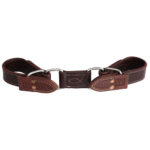
No Buckle Hobble with Leather Center #H3L
$105.00Description: This No Buckle Hobble with Leather Center #H3L is made of 1 3/4 inch doubled and stitched latigo leather. It has a 3 inch long latigo leather link in the center to separate your horse’s legs. The rings and squares are made of smooth stainless steel. This hobble has an easy “on/off” latch that makes it so quick and simple to take on and off your horse’s fetlocks. This should only be used on horses that are completely hobble broke.
Visit “Hobble Along” to read my Tack Talk article on the safe and proper use of hobbles.
Only for use on horses that are hobble broke.
-
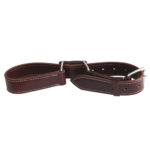
1 3/4″ Hobble #H2
$126.00Description: The 1 3/4″ Hobble #H2 is handmade of doubled and stitched burgundy latigo leather with smooth handmade stainless steel squares. This is a stout hobble at 1 3/4 inches. The soft but strong latigo leather should not chafe your horse’s legs.
How it works: Many horses have been saved from severe injury when caught in wire because they were hobble trained. A horseman may also teach his or her horse to accept hobbles and sidelines so it won’t need to be tied or ground tied. When a horse is hobbled it won’t hurt its mouth with a jerk from a stepped on or looped rein. Hobbles and sidelines can also have a quieting effect on the horse’s mind. Investing in hobbles and their training can have big pay-backs.
Visit “Hobble Along” to read my Tack Talk article on proper and safe use of hobbles.
The first time you use the hobbles on your colt or horse, or while training the horse to accept hobbles, use a wide open sandy area. Do not put hobbles on in a confined space until they accept them easily and well. If you are not familiar with the use of hobbles seek help from a professional who is experienced with their use.