1/2″ Nylon Lead Rope with Snap #ALR1
$30.00
Description: This 1/2″ Nylon Lead Rope with Snap #ALR1 is made of white medium lay 1/2 inch nylon rope. The stainless steel bull snap is hand braided/spliced in. The tail is braided back to prevent unraveling. The length is 10 feet before braiding, making it approximately 9 ft. 4 in. when it’s finished. The 1/2 inch nylon makes a good, stout leadrope with plenty of flexibility to tie easily. You can read how to properly tie a lead rope by clicking here: Take Me To Your Lead Rope.
Related products
-
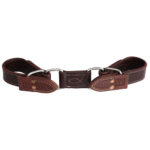
No Buckle Hobble with Leather Center #H3L
$105.00Description: This No Buckle Hobble with Leather Center #H3L is made of 1 3/4 inch doubled and stitched latigo leather. It has a 3 inch long latigo leather link in the center to separate your horse’s legs. The rings and squares are made of smooth stainless steel. This hobble has an easy “on/off” latch that makes it so quick and simple to take on and off your horse’s fetlocks. This should only be used on horses that are completely hobble broke.
Visit “Hobble Along” to read my Tack Talk article on the safe and proper use of hobbles.
Only for use on horses that are hobble broke.
-

Kick Chain #KC1
$67.00Description: The Kick Chain #KC1 is made of doubled and stitched 1 3/4 inch burgundy latigo. It has a leather cuff that fastens to a rectangle to secure it to the fetlock. The rectangle, dee and 12 inch chain are all smooth stainless steel. This kick chain is made to fit the front or back fetlock of any size horse.
How it works: This is an ideal aid for horses that want to kick or paw while in the stall or trailer, or paw while tied up. It can be fastened to either a front or hind fetlock. Most horses will stop pawing or kicking after a short time with the kick chain but a small percentage will need to wear it indefinitely. Generally, one kick chain can be used for a session and then transferred to the other front or back fetlock for a session and the problem will be solved. Occasionally a horse that has been pawing or kicking for a long time will need to wear a kick chain on both legs at the same time.
This is sold as a single kick chain. If you need more than 1 please order additional kick chains in the ”quantity” box.
This is not a tool to be used for teaching horses to not kick at people.
Shown on a horse that is 15.1 hands and 1100 pounds.
-

Sliding Gag Bit with Twisted Wire Snaffle #20-42
Price range: $200.00 through $253.00Description: This Dennis Moreland Tack Sliding Gag Bit with Twisted Wire Snaffle #20-42 is built with a center bar on the bit cheeks which limits the movement of the sliding mouthpiece to provide quicker action and instant relief. The hard lay nylon cord allows the bit to slide easily. The cord is attached to a stainless steel buckle which attaches it to adjustable single ply 3/4 inch harness leather cheeks. The twisted wire mouthpiece gives a stronger signal than the common snaffle and is very good to use if your horse has become resistant to giving his nose and/or lowering his head. This snaffle should improve stops in a horse that is trying to run off. This Sliding Gag comes with your choice of a stainless steel twisted wire headstall or, for the more sensitive horse, a 3/4 inch harness leather slide ear headstall or a 3/4 inch browband headstall (see photo).
How it works: The simultaneous pressure on the mouth from the sliding gag bit and on the poll from the twisted, shaped, stainless steel or the leather crown increases control of the nose and improves total balancing power to produce the ultimate in vertical flexion and feel. Because your rein aids are strengthened with the gag, your leg cues given at the same time become reinforced and easier for the horse to respond to. You will be able to better concentrate on fine details of your training rather than large rebalancing or repositioning efforts regardless of your type of riding. This gag bridle is an excellent training tool for both young and older horses that need to improve flexibility and response. Your horse will learn that when it breaks at the poll the release will be instant, smooth, and consistent. Since these gags release so quickly your horse is not trapped in position while it waits for the release to occur. This helps horses stay calm and confident in training and also when they are in competition. The leather crown works well with this twisted wire mouthpiece on horses that want to drop their heads while continuing to pull on the bit.
Although this Sliding Gag is sold without reins, you can choose any Dennis Moreland split reins or roping reins for your sliding gag. To select your reins simply visit the rein category and add them to your order.
If you don’t have experience with sliding gags Dennis Moreland Tack recommends you seek the help of a professional who has experience as you are learning to use them.
-

Above the Hock Kick Chain #KC2
$78.00Description: The Above the Hock Kick Chain #KC2 is made of 1 inch double and stitched latigo leather with a stainless steel roller buckle and dee. The 18 inch chain attached to the dee is also stainless steel.
How it works: It is attached above the hock. Placement above the hock eliminates the chain being drug around the stall. This is a useful tool for horses that want to kick the stall or trailer. Most horses will stop kicking after a short time but a small percentage will need to wear a kick chain indefinitely. This kick chain is sold as a single. If you need additional Above the Hock Kick Chains, and you may need 1 for each back leg on a horse that has been kicking the stall or trailer for an extended time, please order additional in the “quantity” box.
This is not a tool to be used for teaching horses to not kick at people.
Shown on a horse that is 15.1 hands and 1100 pounds.
-
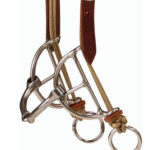
Sliding Gag Bit with Snaffle Mouthpiece #20-9
Price range: $200.00 through $253.00Description: This Sliding Gag Bit with Snaffle Mouthpiece #20-9 comes with a 3/8 inch common snaffle and your choice of 3 headstalls. The Two Piece Snaffle works to give you a smooth, quick and more consistent response when you ask your horse to give its head. This custom designed bit slides easily on the hard lay nylon slide cord made especially for this bit. You will get quick and consistent cues from your reins because of the way the bit slides on the cord. The cord is attached to a stainless steel buckle which attaches it to adjustable single ply 3/4 inch harness leather cheeks. See the diagram at left to visualize this.
The stainless steel twisted wire headstall is designed for horses that need a very strong signal. For the more sensitive horse, a 3/4 inch harness leather slide ear headstall or a 3/4 inch brow band headstall are available (see dropdown to select).
How it works: The Sliding Gag Bit puts pressure on the mouth and at the same time the headstall crown puts pressure on the poll. These 2 points of pressure increase control of the nose and improve total balancing power. With the increased control and balance you will gain vertical flexion and feel.
The draw gag bit strengthens your rein aids so your leg cues given at the same time become reinforced. This makes it easier for the horse to respond. You will be able to concentrate on fine details of your training, rather than large rebalancing or repositioning efforts. This gag bridle will improve your horse’s flexibility and increase his response to your cues.
The center bar on the bit cheeks limits the movement of the sliding mouthpiece. This limited movement provides a quicker action and a much quicker release than gags with longer shanks. Your horse learns that when it breaks at the poll the release will be instant, smooth and consistent. Your horses will be calmer and more confident in training and competition when they are not trapped by a slow releasing gag.
Although this Sliding Gag is sold without reins, you can choose any Dennis Moreland split reins or roping reins for your sliding gag. To select your reins simply visit the rein category and add them to your order.
You may also order the Gag Bit with a twisted wire mouthpiece: #20-42 Sliding Gag w/Twisted Wire Snaffle.
Seek the help of a professional as you are learning to use a sliding gag bit if you don’t have experience.