1 3/4″ Hobble #H2
$126.00
Description: The 1 3/4″ Hobble #H2 is handmade of doubled and stitched burgundy latigo leather with smooth handmade stainless steel squares. This is a stout hobble at 1 3/4 inches. The soft but strong latigo leather should not chafe your horse’s legs.
How it works: Many horses have been saved from severe injury when caught in wire because they were hobble trained. A horseman may also teach his or her horse to accept hobbles and sidelines so it won’t need to be tied or ground tied. When a horse is hobbled it won’t hurt its mouth with a jerk from a stepped on or looped rein. Hobbles and sidelines can also have a quieting effect on the horse’s mind. Investing in hobbles and their training can have big pay-backs.
Visit “Hobble Along” to read my Tack Talk article on proper and safe use of hobbles.
The first time you use the hobbles on your colt or horse, or while training the horse to accept hobbles, use a wide open sandy area. Do not put hobbles on in a confined space until they accept them easily and well. If you are not familiar with the use of hobbles seek help from a professional who is experienced with their use.
Related products
-

Sliding Gag Bit with Twisted Wire Snaffle #20-42
Price range: $200.00 through $253.00Description: This Dennis Moreland Tack Sliding Gag Bit with Twisted Wire Snaffle #20-42 is built with a center bar on the bit cheeks which limits the movement of the sliding mouthpiece to provide quicker action and instant relief. The hard lay nylon cord allows the bit to slide easily. The cord is attached to a stainless steel buckle which attaches it to adjustable single ply 3/4 inch harness leather cheeks. The twisted wire mouthpiece gives a stronger signal than the common snaffle and is very good to use if your horse has become resistant to giving his nose and/or lowering his head. This snaffle should improve stops in a horse that is trying to run off. This Sliding Gag comes with your choice of a stainless steel twisted wire headstall or, for the more sensitive horse, a 3/4 inch harness leather slide ear headstall or a 3/4 inch browband headstall (see photo).
How it works: The simultaneous pressure on the mouth from the sliding gag bit and on the poll from the twisted, shaped, stainless steel or the leather crown increases control of the nose and improves total balancing power to produce the ultimate in vertical flexion and feel. Because your rein aids are strengthened with the gag, your leg cues given at the same time become reinforced and easier for the horse to respond to. You will be able to better concentrate on fine details of your training rather than large rebalancing or repositioning efforts regardless of your type of riding. This gag bridle is an excellent training tool for both young and older horses that need to improve flexibility and response. Your horse will learn that when it breaks at the poll the release will be instant, smooth, and consistent. Since these gags release so quickly your horse is not trapped in position while it waits for the release to occur. This helps horses stay calm and confident in training and also when they are in competition. The leather crown works well with this twisted wire mouthpiece on horses that want to drop their heads while continuing to pull on the bit.
Although this Sliding Gag is sold without reins, you can choose any Dennis Moreland split reins or roping reins for your sliding gag. To select your reins simply visit the rein category and add them to your order.
If you don’t have experience with sliding gags Dennis Moreland Tack recommends you seek the help of a professional who has experience as you are learning to use them.
-
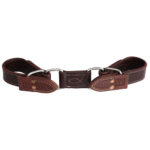
No Buckle Hobble with Leather Center #H3L
$105.00Description: This No Buckle Hobble with Leather Center #H3L is made of 1 3/4 inch doubled and stitched latigo leather. It has a 3 inch long latigo leather link in the center to separate your horse’s legs. The rings and squares are made of smooth stainless steel. This hobble has an easy “on/off” latch that makes it so quick and simple to take on and off your horse’s fetlocks. This should only be used on horses that are completely hobble broke.
Visit “Hobble Along” to read my Tack Talk article on the safe and proper use of hobbles.
Only for use on horses that are hobble broke.
-

German Martingale with Split Reins #CM1C
$202.00Description: The German Martingale with Split Reins #CM1C is the same as the German Martingale Complete #CM1A but without headstall or bit. The martingale is made of 1/4 inch tan nylon cord and comes with your choice of 3 harness leather reins: #ASR6 DM Harness Leather Split Reins are 6 1/2 to 7 feet long and work well on smaller horses, the #ASR3 XX Harness Leather Split Reins are 7 to 7 1/2 feet long and a good choice for horses 14.2 to 16 hands and the #ASR2 XXX Harness Leather Split Reins are 7 1/2 to 8 feet long and work well for horses 16 hands and over. See dropdown to order.
How it Works: The key to the German martingale is the long neck strap giving a good line from the bit to the cinch. This allows the neck to lower from the withers before flexing at the poll. The 1/8 inch solid braid cord that runs through the bit to the reins has a high quality hard finish so slides very easily allowing a quick release. The release is more important than the pull but you have to pull to get the release. A horse learns from the release. The safety hobble strap attached to the neck strap goes through the gullet of the saddle and over the horn to prevent the neck strap from sliding to the ears.
Assistance from a professional is necessary to learn safe use of a German martingale.
The martingale is a very useful tool to aid a horse in learning proper head position as he learns collection. If adjusted correctly a martingale does not force the head to stay in any given position but allows the horse a guide for head placement through automatic release of pressure on the reins when correct head placement is achieved. This can make it easier for a horse to reach a more collected frame over time by allowing assistance with head position as the rider teaches the horse to drive from behind.
The labeled diagram shows the Complete German Martingale #CM1A. This German Martingale with Split Reins #CM1C is the same but comes without headstall and bit.
-
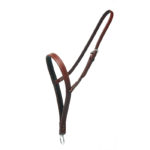
Leather Noseband/Tiedown #T8
Price range: $70.00 through $142.00Description: The Leather Noseband Tiedown is made of 1 inch harness leather and lined with burgundy latigo leather. The leather has been edged, hand rubbed, treated with Neatsfoot Oil and hand rubbed again. The buckle is stainless steel with a leather keeper. The leather beneath the buckle is stitched together to keep the buckle in place when you adjust it between horses. The ring is also stainless steel. Shown without a tiedown strap but is available with your choice of a #ZG 1 inch or a 3/4 inch Leather Tie Down Strap or #ZH Nylon Tie Down Strap (see dropdown to order).
How it works: This is the softest noseband I make and will work really well on a sensitive horse or one that wants to use the noseband for balance rather than pushing on it or leaning into it. A very well made noseband that will hold up to many years of hard use.
-

String Running Martingale #CM4
$48.00Description: The String Running Martingale #CM4 is made of tan 1/4 inch nylon cord. The rings and swivel snap are stainless steel. The safety hobble strap goes through the gullet of the saddle and over the horn to prevent the neck strap from sliding to the ears. This martingale is adjustable both around the neck and to the cinch.
How it works: The running martingale is a very useful tool to aid a horse in learning proper head position as he learns collection. If adjusted correctly a martingale does not force the head to stay in any given position but allows the horse a guide for head placement through automatic release of pressure on the reins when correct head placement is achieved. This can make it easier for a horse to reach a more collected frame over time by allowing assistance with head position as rider teaches the horse to drive from behind.
A good rule of thumb for adjustment is to allow horse to stand comfortably, attach snap to cinch D ring and extend ring straps until they reach the throatlatch.