Above the Hock Kick Chain #KC2
$78.00
Description: The Above the Hock Kick Chain #KC2 is made of 1 inch double and stitched latigo leather with a stainless steel roller buckle and dee. The 18 inch chain attached to the dee is also stainless steel.
How it works: It is attached above the hock. Placement above the hock eliminates the chain being drug around the stall. This is a useful tool for horses that want to kick the stall or trailer. Most horses will stop kicking after a short time but a small percentage will need to wear a kick chain indefinitely. This kick chain is sold as a single. If you need additional Above the Hock Kick Chains, and you may need 1 for each back leg on a horse that has been kicking the stall or trailer for an extended time, please order additional in the “quantity” box.
This is not a tool to be used for teaching horses to not kick at people.
Shown on a horse that is 15.1 hands and 1100 pounds.
Related products
-

String Cavesson w/ Rawhide Knots #CA3
$70.00Description: The String Cavesson with Rawhide Knots #CA3 has a noseband made of tan 1/8 inch solid braid nylon cord. The adjustment knots at the bottom of the noseband are covered with handbraided rawhide pineapple knots. These knots allow the noseband to be quickly and easily adjusted to 19, 21 and 23 inches. This is nice if you have a number of horses to ride. The headstall is made of 1/2 inch burgundy latigo leather that has been edged and hand-rubbed. The buckle is beveled stainless steel with a leather loop keeper. The headstall leather under the buckle is hand sewn together to prevent the buckle from slipping when the headstall is adjusted. This cavesson lays so flat under your bridle you won’t know it is there!
Size Measurement: An easy way to be certain this cavesson will fit is to wrap a leadrope around the nose where the cavesson will lay, mark the leadrope with a magic marker, straighten it and then measure the leadrope. When measuring, be sure to wrap the leadrope loosely enough that the horse will have enough room between his nose and the cavesson to be comfortable and to be able to hold the bit. A good rule of thumb is 2 fingers width between the nose and cavesson (which is the diameter of most leadropes) if the horse is trained to a cavesson. This will fit any nose between approximately 19 and 23 inches.
This cavesson is a good all-around cavesson and can be used on colts if adjusted loosely when starting them in it.
For more information on cavesson fit and use visit: There’s More to a Cavesson than Meets the Eye: How and Why to Use Cavessons
-
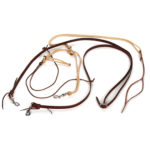
German Martingale with Roping Rein #CM1D
$126.00Description: The German Martingale with Roping Rein #CM1D is the same as the German #CM1A but comes with a roping rein instead of split reins. This martingale has no headstall or bit so you can add your own. The martingale is made of 1/4 inch tan nylon cord with a 1/2 inch latigo safety hobble strap. The roping rein has been edged, hand rubbed, oiled with Neatsfoot Oil and hand rubbed again.
How it Works: The key to the German martingale is the long neck strap giving a good line from the bit to the cinch. This allows the neck to lower from the withers before flexing at the poll. The 1/8 inch solid braid cord that runs through the bit to the reins has a high quality hard finish so slides very easily allowing a quick release. The release is more important than the pull but you have to pull to get the release. A horse learns from the release.
Assistance from a professional is necessary to learn safe use of a German martingale.
The martingale is a very useful tool to aid a horse in learning proper head position as he learns collection. If adjusted correctly a martingale does not force the head to stay in any given position but allows the horse a guide for head placement through automatic release of pressure on the reins when correct head placement is achieved. This can make it easier for a horse to reach a more collected frame over time by allowing assistance with head position as the rider teaches the horse to drive from behind.
The diagram shows the Complete German Martingale #CM1A. This German Martingale #CM1D comes with a roping rein and without headstall or bit.
-
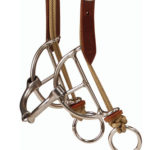
Sliding Gag Bit with Snaffle Mouthpiece #20-9
Price range: $200.00 through $253.00Description: This Sliding Gag Bit with Snaffle Mouthpiece #20-9 comes with a 3/8 inch common snaffle and your choice of 3 headstalls. The Two Piece Snaffle works to give you a smooth, quick and more consistent response when you ask your horse to give its head. This custom designed bit slides easily on the hard lay nylon slide cord made especially for this bit. You will get quick and consistent cues from your reins because of the way the bit slides on the cord. The cord is attached to a stainless steel buckle which attaches it to adjustable single ply 3/4 inch harness leather cheeks. See the diagram at left to visualize this.
The stainless steel twisted wire headstall is designed for horses that need a very strong signal. For the more sensitive horse, a 3/4 inch harness leather slide ear headstall or a 3/4 inch brow band headstall are available (see dropdown to select).
How it works: The Sliding Gag Bit puts pressure on the mouth and at the same time the headstall crown puts pressure on the poll. These 2 points of pressure increase control of the nose and improve total balancing power. With the increased control and balance you will gain vertical flexion and feel.
The draw gag bit strengthens your rein aids so your leg cues given at the same time become reinforced. This makes it easier for the horse to respond. You will be able to concentrate on fine details of your training, rather than large rebalancing or repositioning efforts. This gag bridle will improve your horse’s flexibility and increase his response to your cues.
The center bar on the bit cheeks limits the movement of the sliding mouthpiece. This limited movement provides a quicker action and a much quicker release than gags with longer shanks. Your horse learns that when it breaks at the poll the release will be instant, smooth and consistent. Your horses will be calmer and more confident in training and competition when they are not trapped by a slow releasing gag.
Although this Sliding Gag is sold without reins, you can choose any Dennis Moreland split reins or roping reins for your sliding gag. To select your reins simply visit the rein category and add them to your order.
You may also order the Gag Bit with a twisted wire mouthpiece: #20-42 Sliding Gag w/Twisted Wire Snaffle.
Seek the help of a professional as you are learning to use a sliding gag bit if you don’t have experience.
-

Dog Bone Rawhide Noseband/Tiedown #T2
Price range: $121.00 through $193.00Description: This Dog Bone Rawhide Noseband/Tiedown #T2 is made of 3/8 inch nylon rope with handbraided rawhide nose. The leather hanger has been edged, hand rubbed, treated with Neatsfoot Oil and hand rubbed again. The buckle is stainless steel with a hand braided rawhide keeper. The leather beneath the buckle is stitched together to keep the buckle in place when you adjust it between horses. The dog-bone is also stainless steel. Shown without a tiedown strap but available with your choice of a #ZG 1 inch or a 3/4 inch Leather Tie Down Strap or a #ZH Nylon Tie Down Strap (see dropdown to order).
How it works: You will like the way the rawhide feels on your horse’s nose and how much better your horse will respond to the rawhide if he’s been pushing on a leather tiedown. This tiedown will hold up to years of hard use.
-
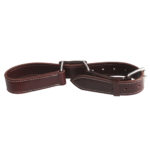
1 3/4″ Hobble #H2
$130.00Description: The 1 3/4″ Hobble #H2 is handmade of doubled and stitched burgundy latigo leather with smooth handmade stainless steel squares. This is a stout hobble at 1 3/4 inches. The soft but strong latigo leather should not chafe your horse’s legs.
How it works: Many horses have been saved from severe injury when caught in wire because they were hobble trained. A horseman may also teach his or her horse to accept hobbles and sidelines so it won’t need to be tied or ground tied. When a horse is hobbled it won’t hurt its mouth with a jerk from a stepped on or looped rein. Hobbles and sidelines can also have a quieting effect on the horse’s mind. Investing in hobbles and their training can have big pay-backs.
Visit “Hobble Along” to read my Tack Talk article on proper and safe use of hobbles.
The first time you use the hobbles on your colt or horse, or while training the horse to accept hobbles, use a wide open sandy area. Do not put hobbles on in a confined space until they accept them easily and well. If you are not familiar with the use of hobbles seek help from a professional who is experienced with their use.