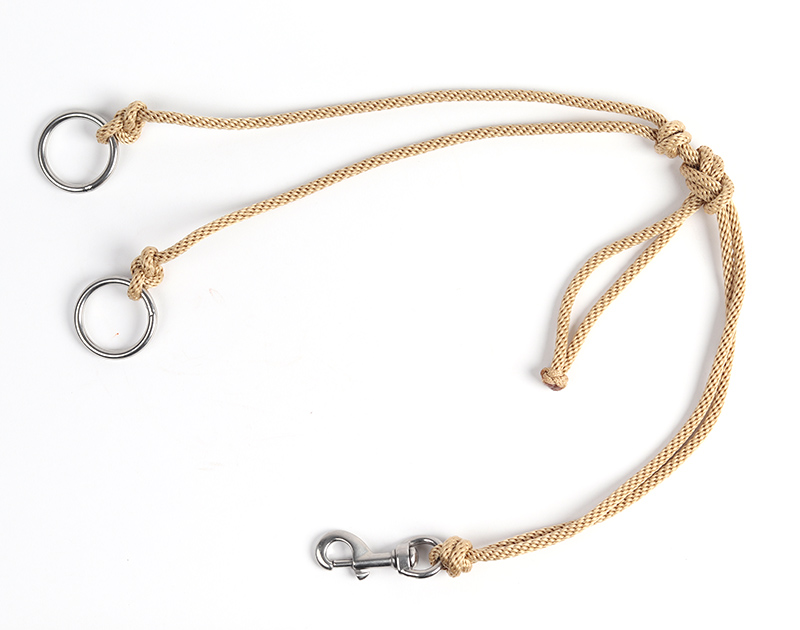

Training Fork #CM7
Price range: $36.00 through $46.00
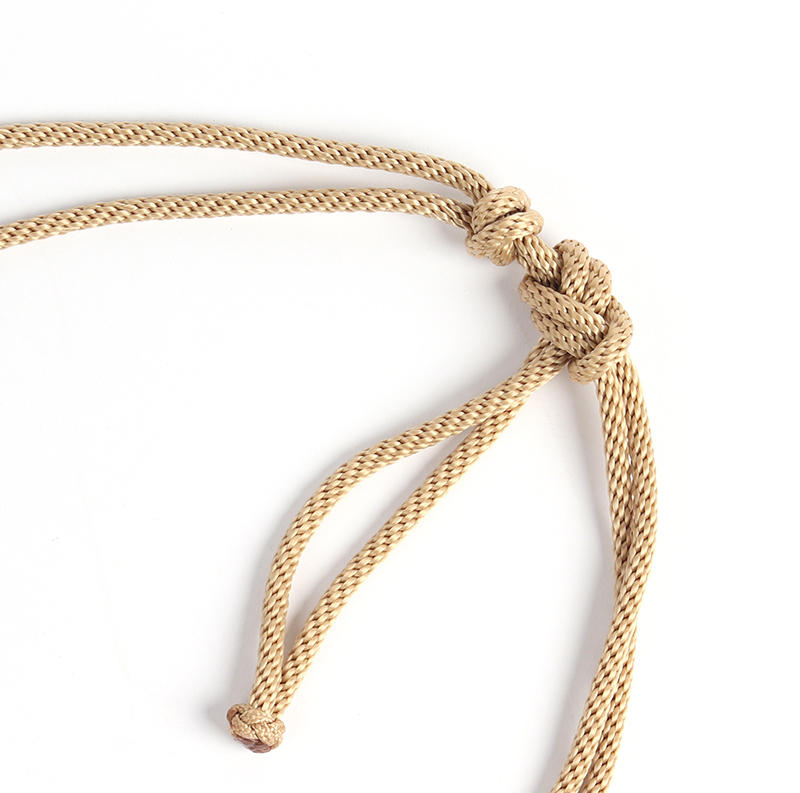
Description: This adjustable training fork is made of tan 1/4 inch solid braid nylon rope with a 1 1/2 inch stainless steel ring tied to each end for a rein to run through. A stainless steel snap attaches it to the cinch.
How it works: A training fork helps horses learn to carry their heads in the proper position to allow them to drive from behind and improve collection. The training fork will apply pressure to the reins and bit anytime the horse’s head rises. You simply adjust the length of the cord that connects to the cinch to place the training fork rings in the correct position for each horse you’re riding. Learn more about training fork and running martingale adjustment here: Running Martingale Adjustment and Use-Keep it Safe.
Do not let the horse drop its head to the ground because it can step on the rein or training fork and cause an accident. Whenever a training fork is used, rein stops need to be used on the reins. Rein Stops will prevent the rings on the training fork from getting caught on the rein ends. Rein stops can be ordered in the dropdown.
Related products
-

Chuck Frasier Sidepull #CP40
$271.00Description: The noseband on this sidepull is crafted from firm 3/8″ nylon rope, which is specially designed to ensure it lays correctly from the first ride. The headstall is made of single ply 3/4″ tight-fibered harness leather with a 5/8″ throat latch. This sidepull comes with slot conchos which are the safest and most secure conchos available. You can see the photos on the left for instructions on slot concho removal and application. The buckles on this Chuck Frasier Sidepull #CP40 are stainless steel with the leather below the buckles stitched to keep them in place.
How it works:
Since this sidepull is considered a bitless bridle, it is designed for use on the adult horse and is a great tool to avoid putting pressure on the horse’s mouth while maintaining plenty of control. With the design of this sidepull, the stainless-steel shanks come against the opposite side of the horse’s face with a direct rein pull so the horse starts his turns without leaning. Put your leg on him once the turn is started to teach him to complete the turn without leaning. The noseband in combination with the dog chain curb provides a strong signal to stop.Watch the video “The Secret to using the Chuck Frasier Sidepull” to learn more.
Shown with ASR3 XX Harness Leather Split Reins.
-
Sliding Gag Bit with Snaffle Mouthpiece #20-9
Price range: $200.00 through $253.00Description: This Sliding Gag Bit with Snaffle Mouthpiece #20-9 comes with a 3/8 inch common snaffle and your choice of 3 headstalls. The Two Piece Snaffle works to give you a smooth, quick and more consistent response when you ask your horse to give its head. This custom designed bit slides easily on the hard lay nylon slide cord made especially for this bit. You will get quick and consistent cues from your reins because of the way the bit slides on the cord. The cord is attached to a stainless steel buckle which attaches it to adjustable single ply 3/4 inch harness leather cheeks. See the diagram at left to visualize this.
The stainless steel twisted wire headstall is designed for horses that need a very strong signal. For the more sensitive horse, a 3/4 inch harness leather slide ear headstall or a 3/4 inch brow band headstall are available (see dropdown to select).
How it works: The Sliding Gag Bit puts pressure on the mouth and at the same time the headstall crown puts pressure on the poll. These 2 points of pressure increase control of the nose and improve total balancing power. With the increased control and balance you will gain vertical flexion and feel.
The draw gag bit strengthens your rein aids so your leg cues given at the same time become reinforced. This makes it easier for the horse to respond. You will be able to concentrate on fine details of your training, rather than large rebalancing or repositioning efforts. This gag bridle will improve your horse’s flexibility and increase his response to your cues.
The center bar on the bit cheeks limits the movement of the sliding mouthpiece. This limited movement provides a quicker action and a much quicker release than gags with longer shanks. Your horse learns that when it breaks at the poll the release will be instant, smooth and consistent. Your horses will be calmer and more confident in training and competition when they are not trapped by a slow releasing gag.
Although this Sliding Gag is sold without reins, you can choose any Dennis Moreland split reins or roping reins for your sliding gag. To select your reins simply visit the rein category and add them to your order.
You may also order the Gag Bit with a twisted wire mouthpiece: #20-42 Sliding Gag w/Twisted Wire Snaffle.
Seek the help of a professional as you are learning to use a sliding gag bit if you don’t have experience.
-
Nylon Tiedown Strap #ZH
$33.00Description: This is a high quality and at the same time economical tiedown strap made of 1/4 inch solid braid nylon cord. The cord loops through the ring in the tiedown and is adjustable. The swivel snap is stainless steel. This Nylon Tiedown Strap #ZH is very durable and let’s you stay on budget while getting a quality piece of gear!
-

Adjustable String Cavesson #CA2
$43.00Description: The noseband on this Adjustable String Cavesson #CA2 is made of tan 1/8 inch solid braid nylon cord. The adjustment knots at the bottom allow the noseband to be quickly changed between horses to 19, 21 or 23 inches. The headstall is made of 1/2 inch burgundy latigo leather that has been edged and hand-rubbed. The buckle is beveled stainless steel with a leather loop keeper. This cavesson lays flat under your bridle and will last for years of hard use.
Size Measurement: An easy way to be certain this cavesson will fit is to wrap a leadrope around the nose where the cavesson will lay, mark the leadrope with a magic marker, straighten it and then measure the leadrope. When measuring, be sure to wrap the leadrope loosely enough that the horse will have enough room between his nose and the cavesson to be comfortable and to be able to hold the bit. A good rule of thumb is 2 fingers width between the nose and cavesson (which is the diameter of most leadropes) if the horse is trained to a cavesson.
This cavesson is a good all-around cavesson and can be used on colts if adjusted loosely when starting them in it.
For more information on cavesson fit and use visit: There’s More to a Cavesson than Meets the Eye: How and Why to Use Cavessons
-

String Running Martingale #CM4
$48.00Description: The String Running Martingale #CM4 is made of tan 1/4 inch nylon cord. The rings and swivel snap are stainless steel. The safety hobble strap goes through the gullet of the saddle and over the horn to prevent the neck strap from sliding to the ears. This martingale is adjustable both around the neck and to the cinch.
How it works: The running martingale is a very useful tool to aid a horse in learning proper head position as he learns collection. If adjusted correctly a martingale does not force the head to stay in any given position but allows the horse a guide for head placement through automatic release of pressure on the reins when correct head placement is achieved. This can make it easier for a horse to reach a more collected frame over time by allowing assistance with head position as rider teaches the horse to drive from behind.
A good rule of thumb for adjustment is to allow horse to stand comfortably, attach snap to cinch D ring and extend ring straps until they reach the throatlatch.